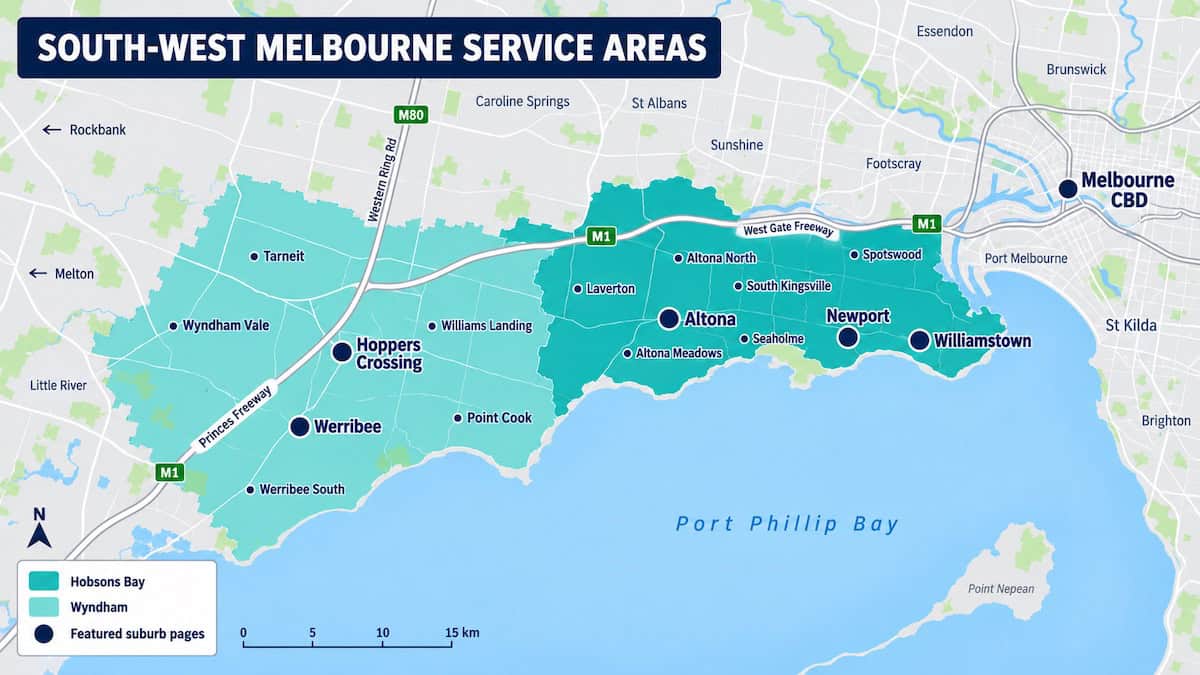
Older homes around Williamstown and Newport
Some established homes in Williamstown and Newport have suspended timber floors, later alterations and restricted spaces beneath part of the building. Access can vary between rooms, and the original house may be supported differently from a rear addition. These conditions affect inspection and work planning; they are not evidence that the stumps have failed.
Hoppers Crossing and Wyndham’s varied housing
Across Hoppers Crossing, Werribee and surrounding Wyndham neighbourhoods, housing ranges from earlier detached houses to newer construction. Many newer dwellings use concrete slabs and are not candidates for traditional stump replacement. We first establish whether the affected floor is stump-supported, slab-supported or associated with another footing system.
Moisture and drainage must be investigated, not assumed
A damp crawlspace can contribute to deterioration where timber supports are exposed to persistent moisture. But location near the coast or waterways does not establish a soil, salt or drainage defect. If we see indications of moisture during an inspection, the source may need assessment by the relevant specialist. Restumping alone does not repair a leaking pipe or faulty surface drainage.
Renovations, extensions and different foundation levels
An uneven floor at the junction of an original house and an extension can involve different materials, construction ages and ground supports. We consider those distinctions before discussing whether individual stumps, floor framing, levelling or footing repairs are relevant.